 (310) 773-5207
If you are a contractor working overseas on a military base who has suffered any type of injury, especially in the ongoing war in the Persian Gulf, you may be eligible for compensation under the Defense Base Act. The experienced Defense Base Act attorneys at the Law Offices of Preston Easley, APC can protect your legal rights, especially when you are experiencing post-traumatic stress disorder.
Contractors working on overseas bases may experience traumatic incidents during their employment. The Defense Base Act provides for these workers to receive benefits, and a physical injury is not necessarily required. Accordingly, post-traumatic stress disorder is a qualifying injury that could allow one to receive compensation under the Defense Base Act.
Schedule A free initial consultation with a defense base act lawyer at the Law Offices of Preston Easley, APC to learn more about your case. Call our maritime law attorneys at (310) 773-5207. Given the nature of your condition, you may be facing an uphill climb to get benefits, making it more vital that you get legal help.
You May Be Able to Receive Benefits for PTSD
The Defense Base Act extends the Longshoreman and Harbor Workers’ Compensation Act to provide compensation for civilian contractors who are working on military bases overseas. This law functions as a workers’ compensation statute for these employees. The same types of injuries that could qualify you for compensation under other laws may allow you to receive compensation under the Defense Base Act.
Given the recent events in the Middle East, contractors who are working on bases may experience trauma related to missile and drone attacks. Even if they have not been physically injured, they may still encounter life-changing effects that could require medical treatment and keep them from being able to work in the future.
PTSD Defense Base Act Claims Can Be Difficult
Trauma-related DBA claims can present even more difficulties than physical injuries. The first hurdle that you need to overcome is to prove that you have suffered a qualifying injury. PTSD is a condition that is specific to you and your experiences. Your diagnosis relies on what you are reporting to a treatment provider, and it can be subjective in nature. DBA insurance carriers are difficult enough, even in the face of a tangible physical injury. They are likely to be even more stringent when they are presented with a condition that they are not able to see through so-called “objective” medical evidence.
Then, you will also face the challenge of connecting your mental health condition to your employment. The insurance carrier may claim that your PTSD condition resulted from something other than your job. Here, you may be forced to deal with the following arguments:
- You were affected by other events outside of the US and not something that necessarily arose from your job
- Your trauma resulted from an event that occurred earlier in life
- The symptoms of PTSD took long enough to develop that it may have occurred due to other reasons
You Must Document Your Trauma-Based DBA Claim Thoroughly
To establish both that you are suffering from PTSD, and that there was a causal connection to your job, you need to be proactive about documenting your case early and to the fullest extent possible. Seeking help early from a mental health professional and continuing with this treatment is the only way that you will have a chance of having your DBA claim granted. Consider selecting a provider who has experience in matters relating to DBA or workers’ compensation cases. Your mental health professional will make notes of the treatment and your diagnosis that will be used when you file a claim. Typically, you may need to go through treatment for an extended period of time before you have sufficient records to support a claim.
Further, you should report your injury without delay. The longer you wait to report your PTSD, the more of an opening you give to an insurance carrier to dispute the causal connection between your condition and job. Under the law, you have 30 days from the time when you knew or should have known that you were injured to report the injury in writing to an employer. The key is that if you have been experiencing PTSD symptoms for some time, you may face questions about when you should have reported the injury. You have one year from the date of injury, or when you should have known that the injury was connected to your employment, to file an actual DBA claim.
Then, you should hire a Defense Base Act claim attorney to represent you in the legal process. These claims are already difficult enough without adding additional complicating factors, such as the insurance carrier doubting your injury and its connection to your work. When you file your initial claim, you should also have your eye on a potential appeal if and when it is denied.
Contact a California Defense Base Act Law Firm
If you are a contractor who has been injured on a military base overseas, speak to a California Defense Base Act Attorney at the Law Offices of Preston Easley, APC. You should schedule a free initial consultation quickly, and you can do so by visiting our website or by calling us today at (310) 773-5207.

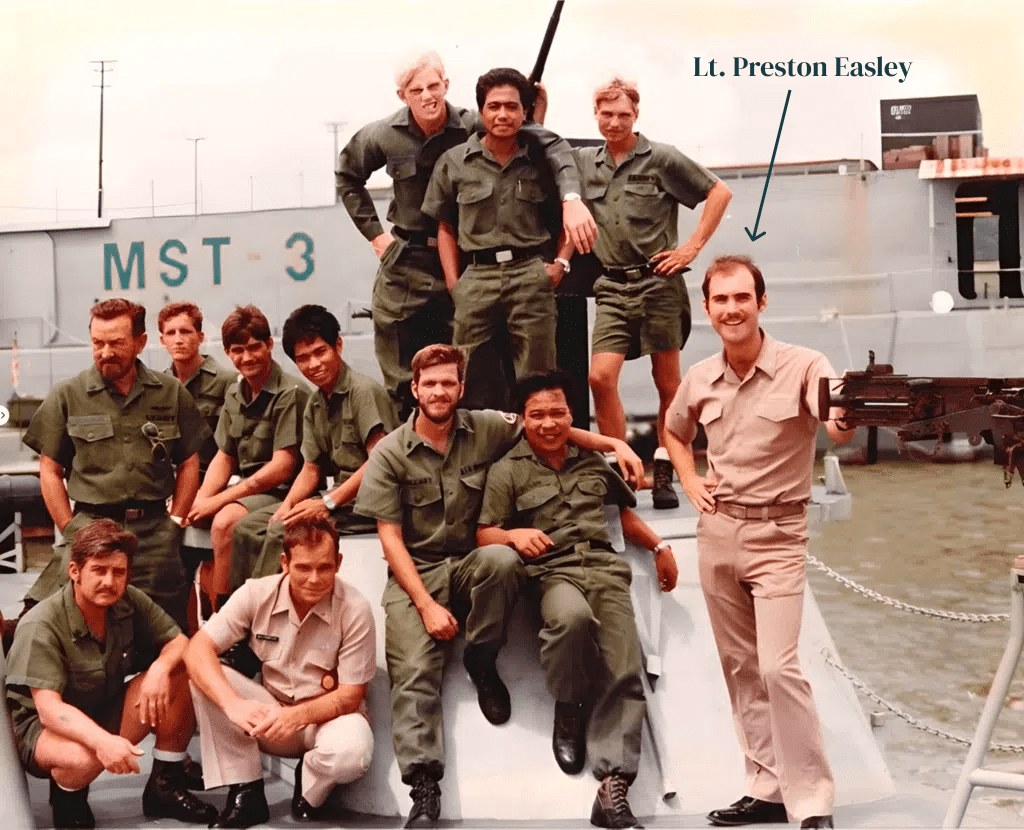
Preston Easley is a graduate of the United States Naval Academy in Annapolis, MD. He served five years of active duty as a Naval officer — three years as a deck officer on a fast frigate and two years as a patrol boat skipper. Mr. Easley also served aboard a tank landing ship in the reserves. Learn more here.