 (310) 773-5207
If you have been injured on the job as a longshoreman, you may qualify for workers compensation benefits. A California longshoremen accidents attorney at Law Offices of Preston Easley, APC can represent you throughout the workers’ compensation claims process.
Longshoremen may suffer an even higher rate of hearing loss than other employees in the transportation sector due to the levels of noise to which they are exposed. There is a federal system that compensates longshoremen who have been hurt on the job. Instead of going through your state, you would file a workers’ compensation claim with a division of the Department of Labor.
Since it may be difficult to deal with the federal government on your own, you should get legal help from a California longshoremen accidents lawyer. Schedule a free initial consultation with Law Offices of Preston Easley, APC at (310) 773-5207 to learn more about how the process will work for you.
Longshoremen Deal with Continuous Loud Noise on the Job
Many people focus on the fact that longshoremen often are tasked with lifting heavy items, and they suffer musculoskeletal injuries. Hearing loss is a common, yet overlooked, injury that longshoremen may suffer on the job. The conditions of their work exposed them to constant loud and grinding noises, which can result in short and long-term hearing loss. If you are a longshoreman who has suffered hearing loss from your job, you may be entitled to workers’ compensation benefits.
Although there are no known statistics related directly to longshoremen, roughly 13% of workers in the transportation and utilities industry report suffering some type of hearing loss from their job. Given the intensity of noise that longshoremen encounter on the job, the statistics could be even higher for this profession.
Even though OSHA regulations strictly protect workers from situations that could lead to hearing loss, these rules are not always followed. OSHA rules governing noise include the following:
- Workers can be exposed to no more than 90 decibels over an 8-hour workday (if the decibel level is higher, the allowable exposure time is reduced)
- The employer must take numerous steps to protect employees when the decimal level is 85 or higher over an 8-hour workday
- The employer must take engineering and administrative measures to reduce an employee’s exposure to noise and potentially address the source
However, longshoremen typically work both around and using complex machinery that emits high levels of noise. Even if they are provided with adequate personal protective equipment, it may still not sufficiently reduce the exposure, such that hearing damage is prevented. For example, longshoremen may be around or use the following loud equipment:
- Cranes
- Forklifts
- Ship engines
- Cargo handling equipment
Hearing Loss Injuries for Longshoremen
When a longshoreman is in close proximity to an operating crane, they are often exposed to decibel levels that exceed 90. Decibel levels for ship engines can reach as high as 110. The end result is that prolonged exposure to these sources of noise can cause damage to the ear, including:
- Noise-induced hearing loss, which can affect both ears
- Tinnitus, which is ringing in the ears that can affect hearing
- Short-term hearing disruption due to one very loud noise
- Acoustic trauma
Whether the hearing loss is short-term or permanent, it can affect a longshoreman’s ability to do their job. Given the high level of activity, and the ever-present dangers of their work, longshoremen need their full ability to hear to remain safe at work.
Workers’ Compensation Claims for Longshoremen Hearing Loss
Hearing loss is considered a job-related injury that could entitle a longshoreman to workers’ compensation benefits. Typically, workers’ compensation for longshoremen is a matter of federal law, as opposed to state statute. The Longshoreman and Harbor Workers Compensation Act is the legal mechanism that allows you to seek both medical care and partial lost wages for your hearing loss. So long as you are able to prove that your hearing loss was the result of your job duties, and not related to a pre-existing condition, you would be able to receive workers compensation benefits.
Instead of filing a claim with your state, you file an LHWCA claim with the Office of Workers’ Compensation Programs in the Department of Labor, who then determines whether to cover it. You can either take your benefits on a monthly basis and as Medical Care is due, or you can negotiate what is called a “Section 8(i)” settlement that would pay you in a lump sum.
Contact a California Longshoremen Accidents Law Firm
Do not deal with the federal government alone when the benefits you need are on the line. Schedule a free initial consultation with a California longshoremen accidents attorney at Law Offices of Preston Easley, APC. You can speak with a lawyer by filling out an online contact form or by calling us today at (310) 773-5207.

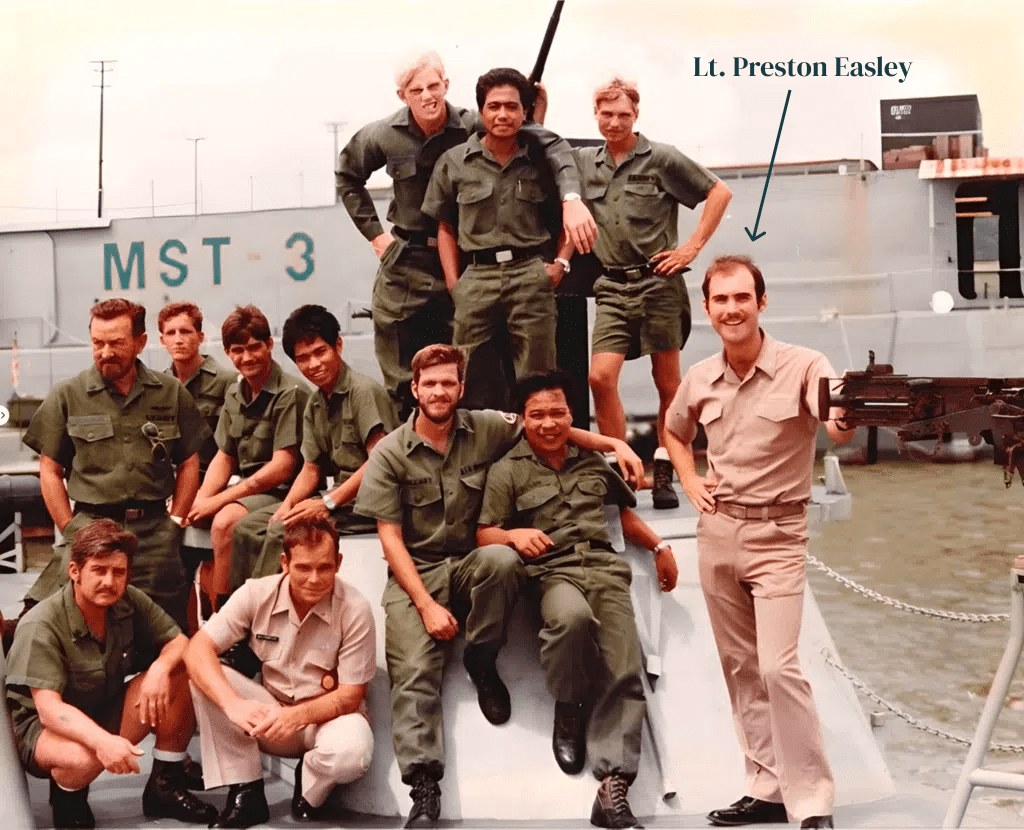
Preston Easley is a graduate of the United States Naval Academy in Annapolis, MD. He served five years of active duty as a Naval officer — three years as a deck officer on a fast frigate and two years as a patrol boat skipper. Mr. Easley also served aboard a tank landing ship in the reserves. Learn more here.