 (310) 773-5207
If you are a commercial fisherman who is one of many who are hurt on the job each year, you may be entitled to financial compensation. A commercial fisherman injury lawyer in California at Law Offices of Preston Easley, APC can evaluate your claim and help determine how to seek compensation.
Although providing employees with a seaworthy vessel seems like it should be basic, it does not always happen that way in practice. Employees in dangerous industries, such as commercial fishing, not only need to contend with the elements, but they must also sometimes deal with a vessel that is not seaworthy. There are special legal rules that apply if the boat itself was unseaworthy.
As a commercial fisherman who has been injured on the job, you have some right to financial compensation, whether it is through maintenance and cure or a direct lawsuit against your employer. Get legal guidance and advocacy from a commercial fisherman maritime accident attorney at Law Offices of Preston Easley, APC by calling us at (310) 773-5207.
Serious Injuries Are Common Among Commercial Fishermen
Commercial fishermen work in a very dangerous environment. They are performing vigorous physical work on the high seas in harsh conditions. They must contend with freezing temperatures and sudden storms. Commercial fishermen are often working with heavy equipment that must be operated with precision.
There is little surprise that commercial fishermen have a very high rate of injury on the job. According to the Centers for Disease Control, commercial fishermen had a fatality rate that is 28 to 30 times higher than the average occupation in the United States.
What Does Unseaworthy Mean?
The employer has a legal obligation to provide a seaworthy vessel. The term unseaworthy has a very specific meaning in maritime law. A seaman must have a reasonably safe place to perform their duties. This definition encompasses every part of the boat, whether it is a deck, ladder, engine or even safety gear. In other words, the work environment has to be safe. A vessel can even be unseaworthy when the crew is not properly trained.
Some examples of unseaworthiness include:
- Slippery or broken decks
- Defective winches or cranes
- Lack of proper safety gear
- Lack of safety equipment
Due to the nature of the boats that commercial fishermen work on, it is very common that injuries may be caused by unseaworthiness.
Strict Liability Applies to Your Case
If the employer has provided the crew with an unseaworthy vessel, there is a different legal rule that applies than the one that you would face in Jones Act cases. There is a doctrine of strict liability that comes into play. You do not have to prove that the employer was negligent. If you are able to prove that the vessel itself was unseaworthy, the employer is strictly liable for your injuries.
Strict liability does not automatically mean that the employer is legally responsible for what happened. What it does mean is that the burden of proof then shifts onto them to show why they should not be held liable. The employer has a limited number of defenses that they can use in this case that include:
- The owner did not have actual control of the vessel
- You shared some of the blame for the accident (comparative negligence would reduce your compensation, but not eliminate it entirely)
- The unseaworthy condition of the vessel did not have a causal connection to your injury
- The dangerous condition was open and obvious
How to File a Lawsuit for an Unseaworthy Vessel
Unseaworthiness claims are separate from Jones Act lawsuits. To be clear, you have the potential to file both an unseaworthiness and a Jones Act claim at the same time. You can recover under either theory, although it may be easier to win a lawsuit for an unseaworthiness claim. It helps to file lawsuits under both when you have facts that can help you win under either legal theory. Under federal law, you have three years from the date of your injury to file your lawsuit.
Since federal law forms the basis for your claim, you would file your case in federal district court. Your commercial fisherman injury lawyer investigates the accident and gathers evidence that can show that the vessel was unseaworthy. They may use the following:
- Photographs and videos of the dangerous condition
- Maintenance and inspection logs for the vessel
- Eyewitness testimony from crew members
- Coast Guard or OSHA reports of the accident
Contact a California Commercial Fishermen Injury Law Firm
The first step towards being compensated for injuries you suffered as a commercial fisherman is contacting an attorney who can help pursue your case. Schedule a free consultation with a California commercial fishermen injury attorney at Law Offices of Preston Easley, APC by messaging Us online or by calling us today at (310) 773-5207.

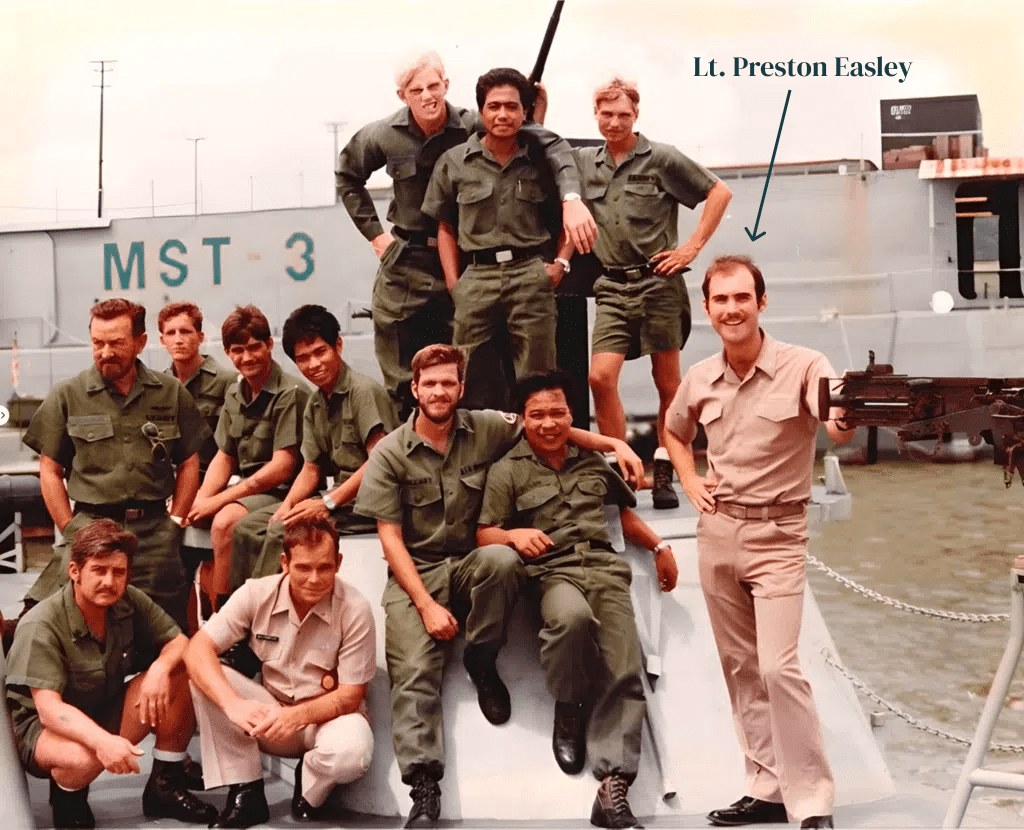
Preston Easley is a graduate of the United States Naval Academy in Annapolis, MD. He served five years of active duty as a Naval officer — three years as a deck officer on a fast frigate and two years as a patrol boat skipper. Mr. Easley also served aboard a tank landing ship in the reserves. Learn more here.