 (310) 773-5207
If you are a crew member who has been injured in an accident, you may be entitled to compensation under the Jones Act or general maritime law. A California maritime attorney at the Law Offices of Preston Easley APC can help build your case.
Whether you are filing a Jones Act negligence lawsuit against your employer, or a general maritime law claim, you need evidence that can prove your case. There are multiple sources of evidence, and some may be in conflict with each other. This is especially true when you may have crew testimony that is inconsistent with what appears in electronic law books. The question is which evidence gains Supremacy when they do not square with each other.
Have you suffered a serious injury at sea? If yes, the California maritime lawyers at the Law Offices of Preston Easley APC can fight for us. Talk to us today by calling us at (310) 773-5207 to learn whether you may qualify for a settlement.
A Commercial Vessel Has Various Recording Devices
Just like on a truck or an airplane, commercial vessels also use technology to record key metrics about the boat. An electronic logbook captures the following:
- The boat’s GPS position
- The course that the vessel took
- The boat’s speed
- Route tracking
The ship’s black box provides even more valuable information that may be helpful in a Jones Act or other maritime personal injury case. The black box may give access to things like radio communications, steering and engine commands and bridge activity. On top of that, there may also be data from the engine room that can show how the equipment was working at the time of an accident. All of this data is time-stamped, making it difficult to alter or fake.
The Role of Witness Testimony in Your Case
Witness testimony is also considered extremely crucial in any type of personal injury case. When objective third parties give their clear testimony about what happened, it is considered to be powerful evidence. Human recollection, especially when there has been an accident, can be either an important supplement to electronic data or an independent way of proving your case. testimony can corroborate what appears in the records and result in a very strong case for compensation.
What witnesses remember may not always be consistent with the hard data. If that is the case, either you or the defendant will try to use witness testimony to undercut electronic records. The defendant may be trying to take electronic records out of context or focus on a very small snippet in time when there is far more to the story. Witness statements can tell a larger story, or they can back up what appears elsewhere in the electronic records. On the flip side, electronic records can also serve as a check on what the crew is saying.
How the Witness Testimony and Electronic Data Relate to Each Other
There is no hard-and-fast rule about which evidence wins when there is a conflict. There are times when a court may value the hard evidence that is found in an electronic file because it is considered clear and often indisputable. Electronic records are time-stamped, and they can give a relatively conclusive picture of what happened to cause the accident. However, electronic records are not always paramount in every instance.
Fellow employees may be telling a story that their employer wants to hear or one that can protect their own job and reputation. For example, defense counsel may call employees to the stand, and they will testify that the boat was safely operated. When your maritime lawyer has obtained all of the data logs, they can tell a completely different story. In this case, the court would likely give the electronic data more weight because it tells the story in a way that humans cannot. A court is likely to weight electronic data more when it is complete and accurate, and there are no issues about either chain of custody or the evidence being taken out of context.
However, there are times when human testimony can have greater primacy. For example, your lawsuit may relate to the conditions on the boat at the time of the accident. You may claim that the crew was being forced to work under unreasonable conditions when they were fatigued. Here, this is not something that can necessarily be captured by electronic data, and you need testimony to make this point. An experienced California maritime lawyer can either help bridge the gap between electronic data and testimony, or they can help exploit it if it is helpful for your case.
Contact a California Maritime Law Firm
Talk to a maritime attorney today about a potential Jones Act lawsuit by scheduling a free initial consultation with the Law Offices of Preston Easley APC. You can reach us through our website or by calling us today at (310) 773-5207.

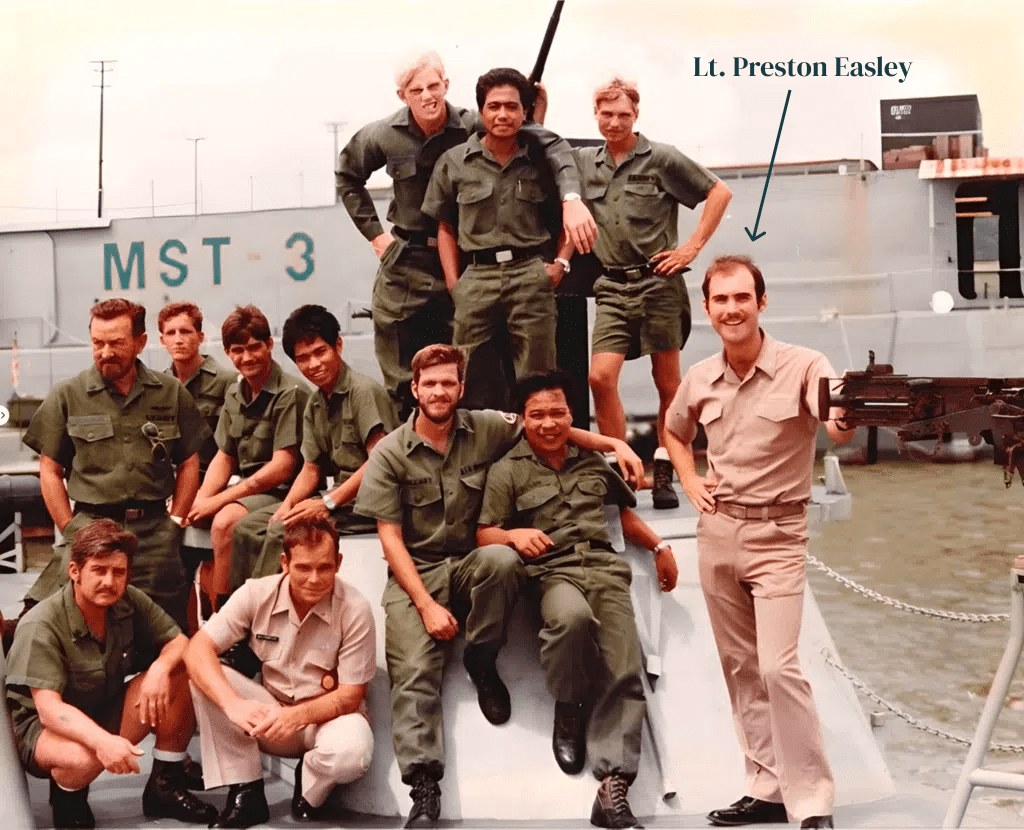
Preston Easley is a graduate of the United States Naval Academy in Annapolis, MD. He served five years of active duty as a Naval officer — three years as a deck officer on a fast frigate and two years as a patrol boat skipper. Mr. Easley also served aboard a tank landing ship in the reserves. Learn more here.